Romain Liverato

Romain Liverato

Multi-Talented Artist


Romain Liverato's artistic approach stems from a relentless quest to capture the natural landscape in all its grandeur. His photography celebrates Nature for its own sake, in all its sovereignty and independence, free from any anthropocentric interpretation.

However, during his many travels, this search for untouched Nature has come up against a persistent reality: while Nature remains omnipresent, so too does the human footprint.

This observation marks a decisive turning point in his artistic approach. Landscape photography thus becomes a starting point, a material that he questions, transforms, and enriches.

Through a resolutely visual approach, he developed a body of work at the crossroads of several disciplines, incorporating various techniques such as painting, watercolor, mosaic, gilding, collage, and digital retouching. These gestures introduce a visual and semantic contrast.

The aim is not to erase reality, but to reveal what alters our perception of it: the marks, fractures, and resurgence of human activity in our territories.

Through this hybridization of media, her work brings out the tension between aesthetic contemplation and environmental questioning. It explores the complexity of the relationship between humans and nature, inviting the viewer to reflect in a new way—poetic, critical, and committed—on our relationship with living things.
Icons

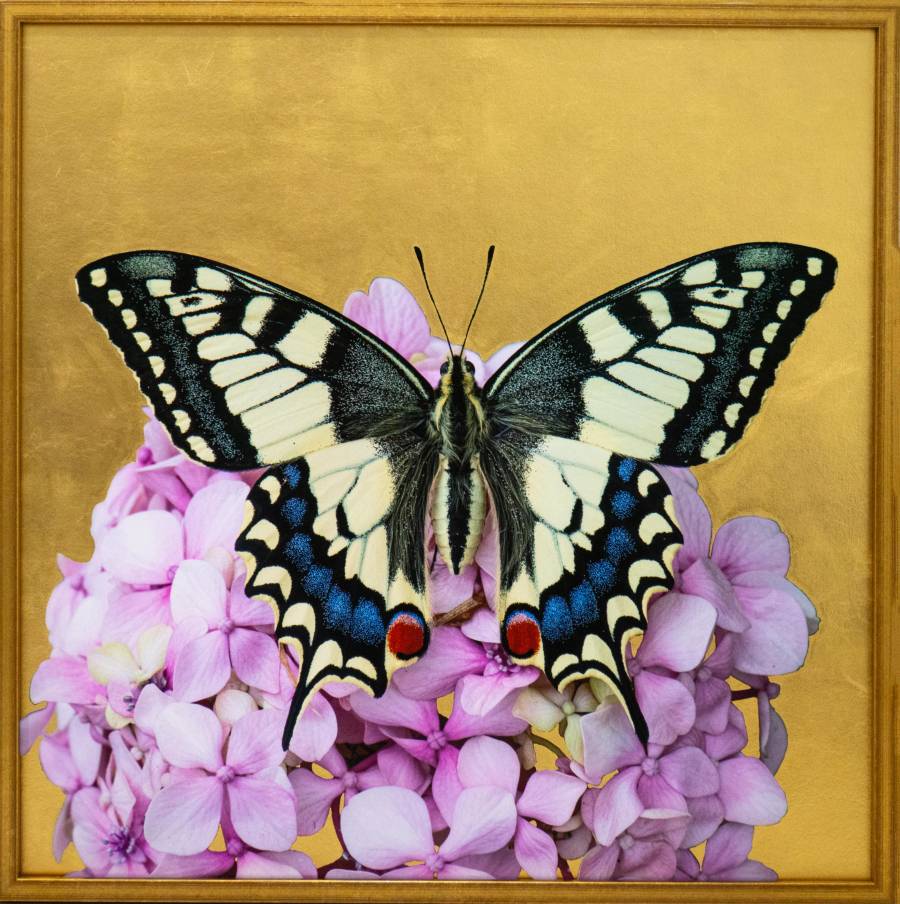
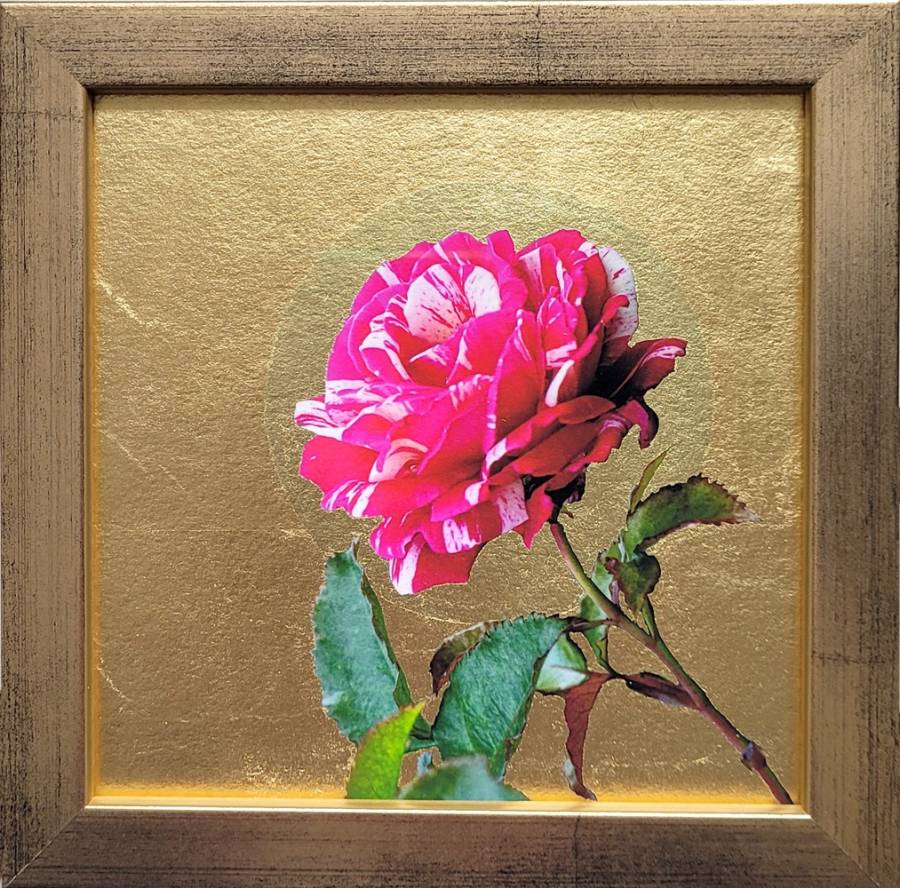
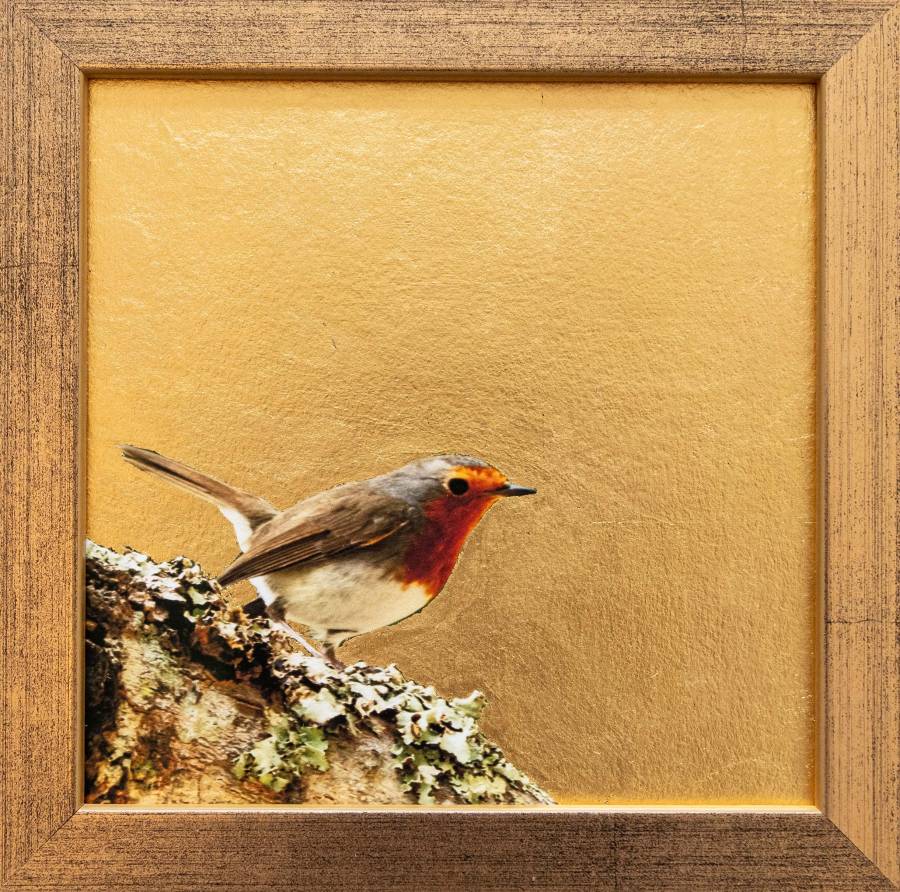
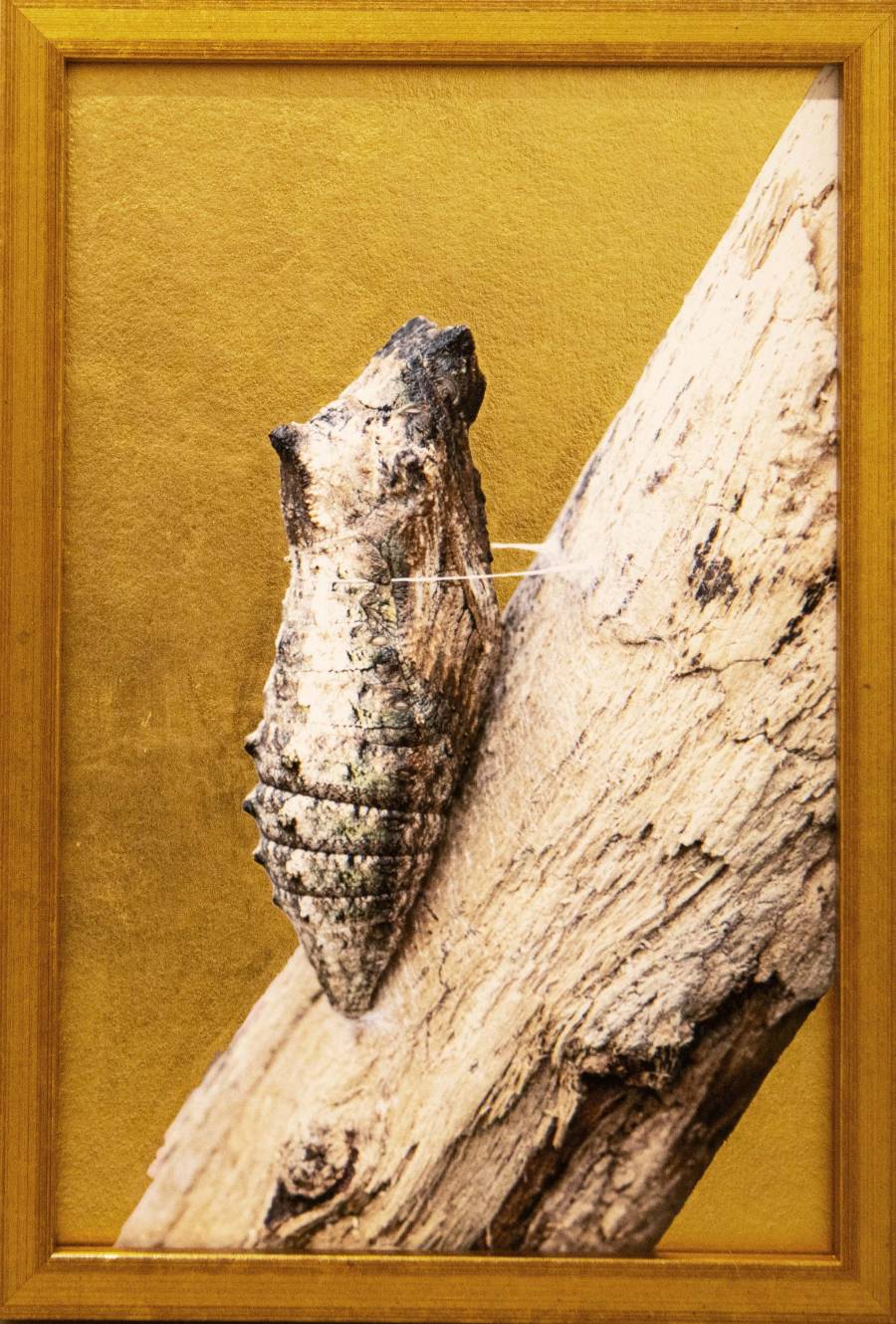
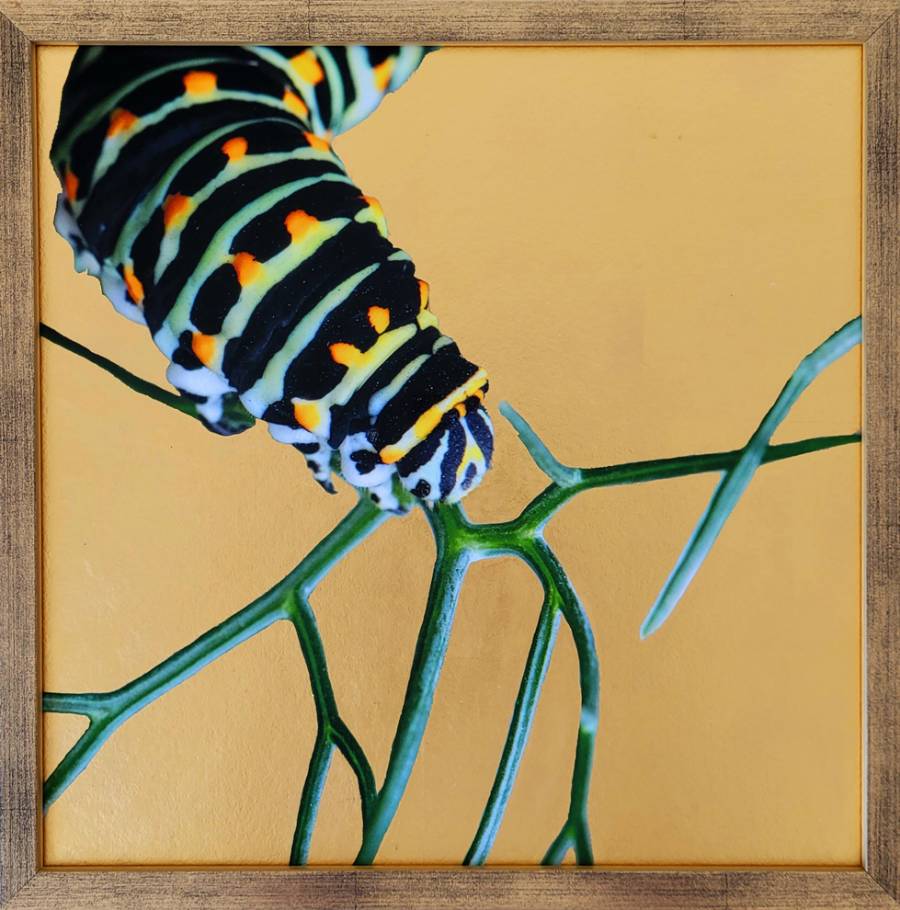
Working with the “Icons” series allows me to transpose the codes of Byzantine art to the representation of landscape and living things, elevating Nature to the status of a sacred subject.
In each work, I incorporate a gold background, traditionally a symbol of divine light, which surrounds natural fragments, animals, and horizons with a halo. Here, gold no longer refers to the religious divine, but to a universal, contemporary sacredness, whose sole subject is living beings.
In the Byzantine tradition, the gold background erases all spatial or temporal references, giving the subject a timeless and sacred dimension. I use this process as a tool for a symbolic reinterpretation of the natural world. Celestial light now surrounds every element of life, offering it constancy, dignity, and solemnity.
I revalue what we too often relegate to the background as a simple blade of grass, a piece of bark, or a distant horizon. Here, every fragment of landscape becomes an object of contemplation. Each work affirms that Nature, as a whole and in its most modest details, deserves sacred recognition.
Linked to history, I have adopted small formats (5.2×5.2 inches or 3.9×1.1 inches without frame) reminiscent of the portable icons that travelers once carried with them on their journeys. These intimate works invite a personal, almost devotional relationship with Nature.
Presented as a whole, the series forms a polyptych, an installation inspired by the Byzantine iconostasis, the wall of “icons” placed between the faithful and the altar. This ensemble creates a fruitful tension between the intimate and the monumental, between the detail and the whole, between the spiritual and the organic.
It is interesting to note that “Icons” is a continuation of my “Sanctified” series. In it, I revisit certain symbols from ancient religious art, such as the halo and the gold background, not as stylistic references, but as plastic and conceptual tools to question the value of the living world and the relationship we have with it.

See all
Souvenir

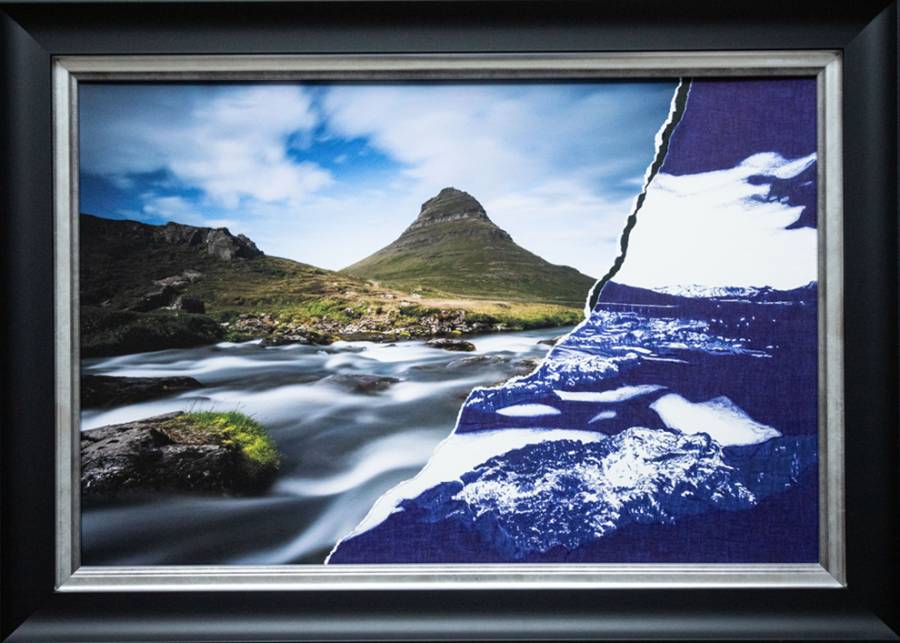
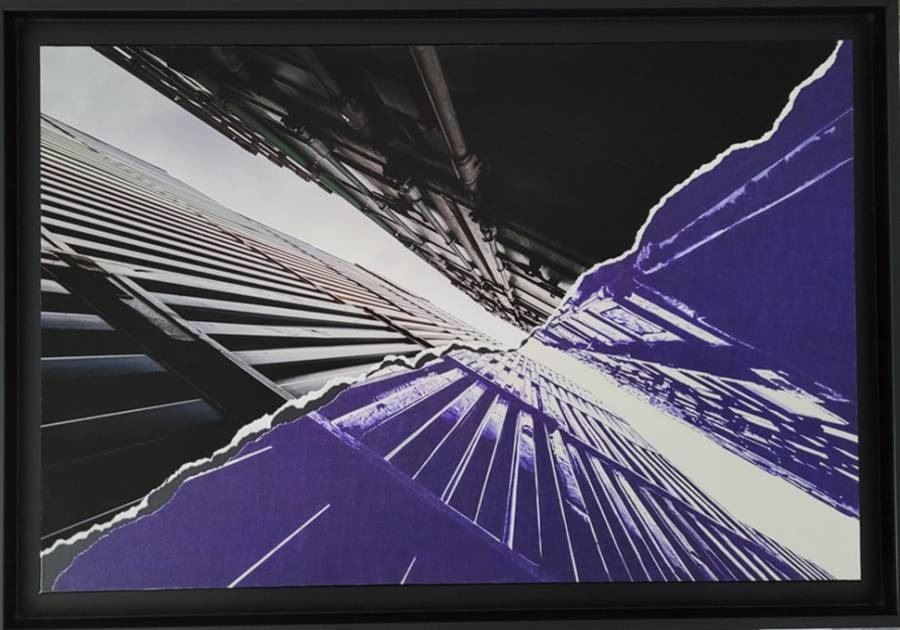
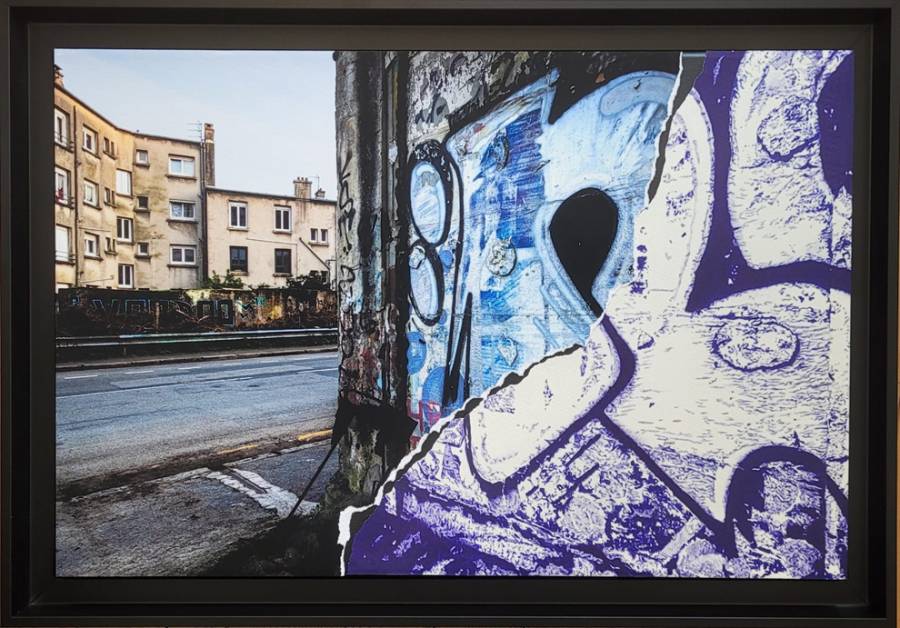
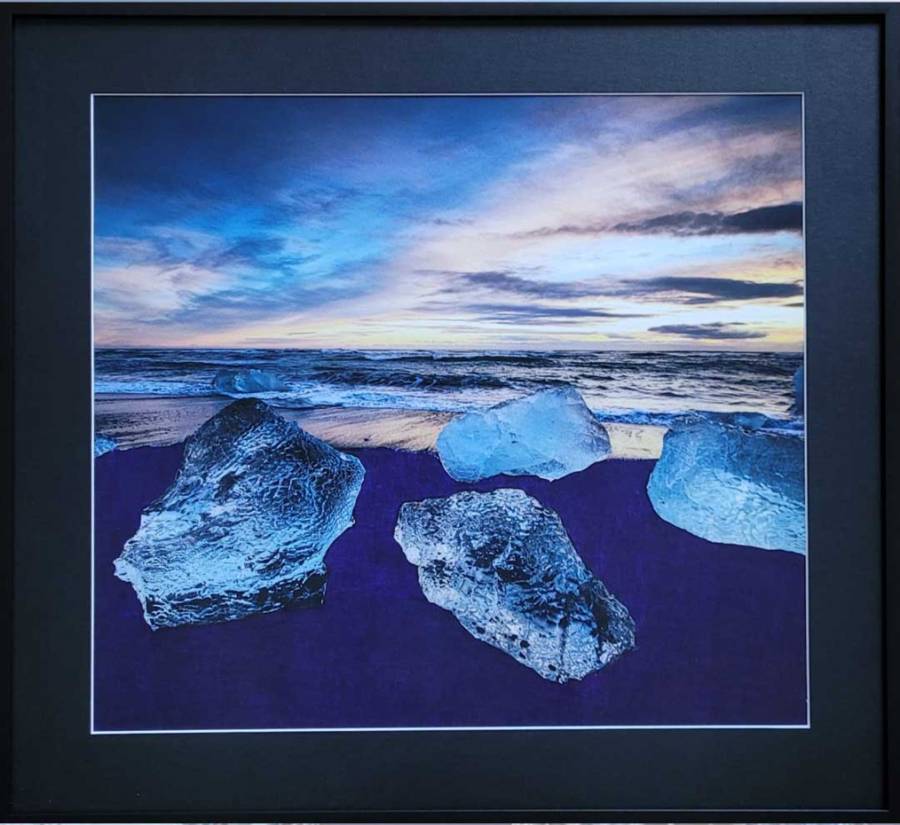
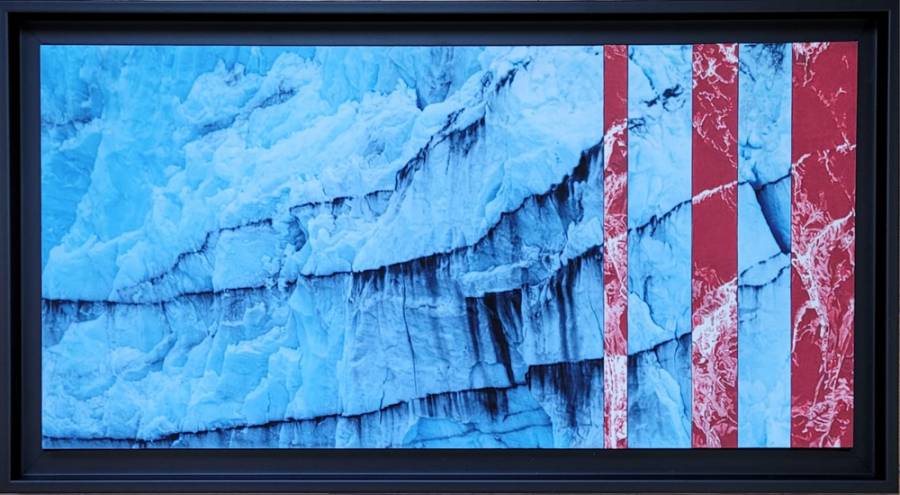
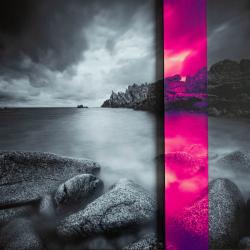
Inspired by Heraclitus' famous maxim, “You can never step into the same river twice,” “Souvenir” questions impermanence, the fleeting nature of lived moments, and the way in which reality becomes an inner image. I wanted to initiate a poetic and visual reflection on memory, its changing nature, and the inevitable transformation of reality. I imagined this series as a dialogue between two mediums: photography and drawing. To achieve this, I invited Jude Castel, an artist and illustrator, to contribute to my works with his own visual language, using blue or red Bic pens, which he wields with remarkable precision. This collaboration has given rise to works created by four hands. Each work thus combines two registers: a photograph taken by me and a drawing added at a later stage. The two parts can be separated by a clean tear: a strong visual gesture symbolizing the break between what has been experienced and what remains. This tear is also a place of passage: it symbolizes the transition from the photographic image, still anchored in reality, to the drawn line connected to our memory.
This alteration between these two worlds can also symbolize, more generally, the transformation of the landscape, of Nature, or of any place that changes by its very nature, through the passage of time, through environmental changes, and through the subjectivity of those who perceive this reality. This process also echoes the changes in the landscape itself: its transformations under the effect of time, human impact, or climate change. In some works, the use of red reinforces this interpretation by evoking rising temperatures or visible signs of change.
“Souvenir” emphasizes impermanence. It explores what is falling apart, what is changing. By combining photography and drawing, reality and memory, I emphasize a sensitive interpretation of time, absence, and what we choose or choose not to remember.

See all